
Welcome to Wickman Electric Vehicle Engineering
WEVE got the power - the others don't have!
Because there are two unchanging technical problems with ALL the current electric cars:
• The battery pack is DIRECTLY connected to the traction motor •
• Only a SINGLE battery pack powers the vehicle •
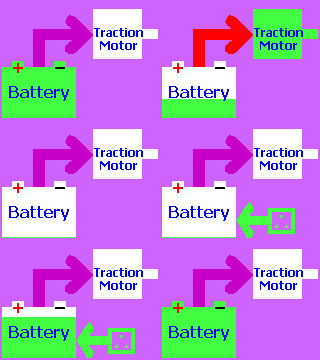
Connecting a battery directly to the traction motor results in very high current discharges
As a single battery pack is fitted, if it's heavily discharged the capacity quickly drops
People complain about the poor performance of EV's, but don't blame the batteries!
The problem is the rate of DISCHARGE
(Discharging at a high rate leads to the capacity and lifetime of ANY battery being shortened)
This is why electric cars have always failed. It's a FACT, no battery will last very long if it's HEAVILY discharged!
EV HISTORY
Early electric cars were rushed to market to help promote 'green energy' transport solutions, but many failed as there wasn't much thought to the actual design and application of use.
Eastern Electricity for example in the 1980's had what they said was the 'electric car of the future'.
It was released with a fancy media promotion that I attended, showing off their new Eastern-Electric car, but underneath was the same old technology that had been used before - a single battery with also a direct connection (via some sort of power controller) to the traction motor, and so the Eastern-Electric car (like many others) just faded away into history!
Electric vehicles once again are being promoted as a 'green' alternative, zero emission and cleaner than combustion (which is great!) BUT, as before, nothing has changed much regarding the design and technology, because a single battery pack is STILL being used and that then is STILL being connected to the traction motor - so it's not into the future, but back to the past as far as the 'modern' EV is concerned.
Compared to a combustion engine - an electric car has rather a difficult time really as the route is often random, conditions vary (hills, loading weight etc) so an ideal battery capacity cannot be chosen in advance. Also the cell size can't be too big or heavy (because of vehicle space and weight limitations) so it usually has to be of quite a low capacity. Batteries don't like the cold and so in winter that can reduce capacity by 20%. An EV has no engine based heat and while the battery or traction motor may get hot during driving, getting that heat into the car is tricky. One can't rely on an electric heater as that will flatten the battery even faster!
In addition headlights required in the dark, wipers when it's raining and internal electronics too (for example audio systems, air conditioning etc) all add extra battery demands. Once the battery capacity goes, the vehicle with just a single cell pack will come to a total standstill with no power available - until it can be fully recharged again as there is NO onboard reserve power source.
Various car manufacturers were said to have designed a 'new' generation of EV, but they were simply bodywork or styling changes, as the internals (the real heart of any EV) just stayed exactly the same, apart from advances with battery development, so not surprisingly the electric cars yet again failed to perform. Also, with a single battery system if power capacity quickly drops it then must be recharged from a mains source, however the vehicle is often no where near a recharge point, or can't move far to find one.
This in turn causes range anxiety for EV drivers because they never really know how long the vehicle will run for and no matter what battery was used, the life was very limited due to the high discharges taken out, not to mention very long recharge times too - some taking 8 hours or more.
Modern electric vehicles all now use some sort of regenerative braking in a vain attempt to help 'charge' the battery by recovering power from braking - but it's basically a gimmick as although it does capture otherwise wasted energy, the amount that is recovered during braking (as a charge) is tiny compared to the high discharge amounts taken out when driving. Also as braking time is short the recovered power only lasts for a few seconds (at most!) - and since the vehicle has slowed down or even totally stopped (due to braking) getting it moving again requires another high discharge demand from the battery which simply hasn't been put in - hence the rather useless regenerative braking recharge which (as mentioned) is a good idea in principal, but by using the old battery to traction motor technology the theory is simply wasted!
A single battery pack cannot be heavily discharged and only micro-recharged, as that simply won't increase the capacity and enable a longer driving range!
You'll no doubt may have had the same heavy discharge problem with a combustion vehicle: If its battery is used too much trying to start up the engine - it's generally OK for a few starts, but trying to crank it over too many times results in the battery being then unable to turn the engine over! Micro-recharging of the battery just isn't sufficient for a good restart procedure. It always requires a long recharge.
Adding more batteries to an electric vehicle is one way to get more capacity and a longer driving range, but that then greatly increases the cost and EV's are already far more expensive to buy than combustion types. Also, adding extra battery cells = extra weight, however yet again nothing is really gained here because even with added extra range batteries the now heavier vehicle will discharge quicker due to the additional effort required to move it - with extra batteries it will cost more AND then take even longer to recharge!
Since recharging can take many hours battery swapping was a inspired 'solution' to extend range but without adding extra heavy batteries, and also reduce recharging time. However, there is no guarantee the swapped battery is as good or as cared for as the one previously being used - so the range, reliability and actual performance of the vehicle can be badly affected.
Also really being promoted now is 'fast' charging which tries to reduce the time it takes to recharge the vehicle - and while it does shorten the recharging time, fast charging any cell shortens battery life. So again nothing is gained here, because although yes... now it takes less time to recharge, that saving then ends up really damaging the battery pack - so time saving has a cost, new batteries!
Electric vehicles mostly all use AC (alternating current) for the traction motor now rather than older DC to DC (direct current) systems as AC is more powerful, but the AC for the motor has to be converted from the DC battery source (using a DC/AC inverter - as no battery can store AC), so not only is the battery power being converted (wasting energy to power a more 'efficient' AC motor!) - it's still basically 'directly' connected to the traction motor, which demands huge amounts of power and as there is only ever one battery 'pack' it's hardly surprising that doesn't last very long.
PR people hate references to milkfloats whenever electric vehicles are mentioned, but they're about the only electric vehicle that was 100% reliable and didn't run out of power - so why did they work?
Simple! When electric milkfloats trundled the streets in the early hours delivering the morning pint, they were reliable as their route was broken down in advance into a series of components: Distance, obstacles (hills etc), load weight (milk etc) - and then the battery capacity could be chosen for the task the vehicle was to perform.
This was a basic form of battery management. Extra capacity was given too as on a windy & wet day the vehicle would use more power than usual, but the advantage of the milkfloat was it always had a set route which didn't ever change, AND the load weight it carried lessened as it went along delivering the milk - replacing full bottles with empty ones. Also even though the traction motor was directly connected to the battery which of course lost capacity as the vehicle was used - the load weight constantly reduced as the battery discharged and the vehicle also didn't travel very fast. It was expected to stop & start often, but the battery pack had some vital 'rest' periods while the milk was being delivered - and it was never driven 'flat out' at maximum power for very long periods of time. In most types, the entire system was totally DC (direct current) based, no converter was required and because the system was DESIGNED to the task the vehicle was required to do, this method worked very well with the empty bottled milkfloat returning back to base without an empty battery!
So the milkfloat system worked because of initial design and careful application of use. The trouble was that technology (without much thought) was transplanted into then becoming the basis for an 'electric car' - which is totally different, as it simply doesn't operate in the same way!
I learnt a lot about batteries by reading the Battery Reference Book (by T. R. Crompton) and from that located the 2 main problems with the electric car (brought about really by no thought as to the design or application of use) - and this was very important because it always resulted in electric vehicles not working.
The next step was to then provide possible solutions, by firstly NOT connecting the battery directly to the traction motor, and secondly providing ANOTHER battery source.
There had to be a proper design and application procedure as was done for the milkfloat - but seriously lacking with the electric car!
The electric car had failed because it couldn't and didn't operate in the same way. The 'transplanted' technology had done well in the milkfloat - but with an electric car there is usually no set route, the loading doesn't lessen as the battery discharges - and worse it was also expected to go flat out (usually continuously), and much faster!
That didn't seem to matter though to all of those who initially promoted green energy transport solutions, because they never applied any application of use to their electric cars so they failed to work. The problem is, even now they still don't!
Yes modern electric cars sell, but they are very expensive, have a limited range (although advances in battery technology has allowed them to go further) but the 2 main problems with them is still there: a single battery pack and direct connection of the battery to the traction motor!
Gwiz, Leaf or even a Tesla, they all have the same operating principle which ONLY thanks to battery advances have allowed them to produce models that consumers can now buy and drive, but even so they are greatly limited by the design principles that they still share with early electric vehicles.
Many 'advanced' electric cars are even trying to 'cool' their batteries down now (either by a fluid system or via forced air using fans etc) in order to try to minimise the effects of the heavy discharges to the battery packs, which causes the overheating - as does fast charging now too.
Any battery which overheats can be seriously damaged, or worse can then cause a fire risk - but the designers still just don't get it as they are trying to mask the problem of the direct (battery to motor) heavy discharge issue by attempting to reduce overheating caused from that, by adding assisted cooling techniques!
WEVE SOLUTIONS: The Turbine Generator
As an independent developer, I took a different path - by firstly taking a serious look at the problematic areas of all existing EV designs (rather than rush into production) - and so worked for many years pioneering a radical new technology which would solve ALL of the issues with previous electric vehicle design.
I pioneered, funded, invented and then successfully patented a TOTALLY NEW and unique electric vehicle system - which then got even better!!


It's not complicated though - and simply combines: a pump, fluid circuit and a fully integrated turbine generator
Modern electric vehicles use AC (alternating current) to power the traction motor rather than original DC (direct current) traction systems - but then the AC always has to be converted from the DC battery source via a DC-to-AC inverter and that is connected (via some sort of power controller) to the traction motor - which demands huge amounts of power and because there was only ever one battery 'pack' fitted, it's hardly surprising it doesn't last very long before recharging is required.
My unique system firstly NEVER connects the battery directly to the traction motor, because instead a fluid circuit is used which enables batteries to have a constant light load - by just powering a small DC pump!
Because the battery only powers a pump, no AC conversion is required and it also has a constant and lower current demand, which ensures no stress or overheating since there are no heavy discharges, vital to keep the battery life long and available capacity high.
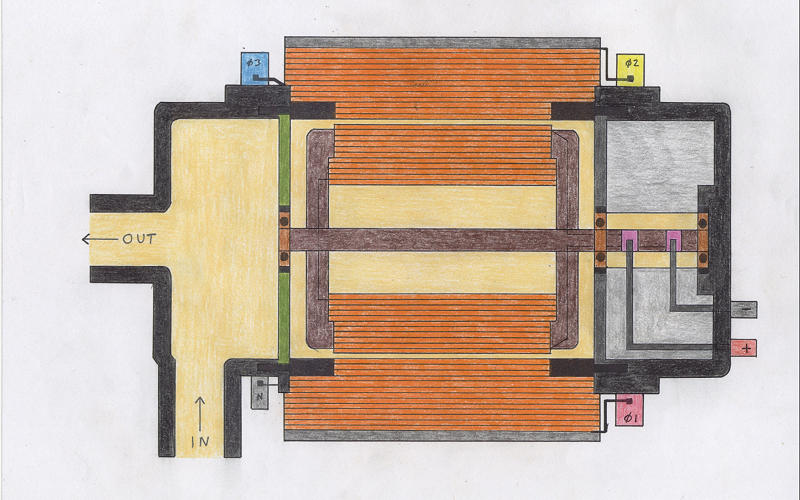
AC power however would be required for a modern traction motor, but rather than using DC-to-AC conversion, I devised a new method! An insulating transformer oil is used in a small fluid circuit and this oil is pumped at a high speed into my unique and patented turbine generator unit. The design enables a very high vortex of the fluid to form inside the turbine casing and because the generator's armature is integral with the turbine, that then rotates too (from the induced vortex effect) creating a pure 3 phase AC output suitable for the traction motor.
The turbine generator vortex thus converts pumped fluid into AC power. The unit is very compact as both the fluid turbine and the AC generator are all combined into a single unit.
There is a most powerful force in nature: the VORTEX - ask anyone who's witnessed a tornado and they will tell you. It's an awesome power that's generated. This was the thought behind the turbine generator unit, incredible power yes, but contained and thus extremely useful!
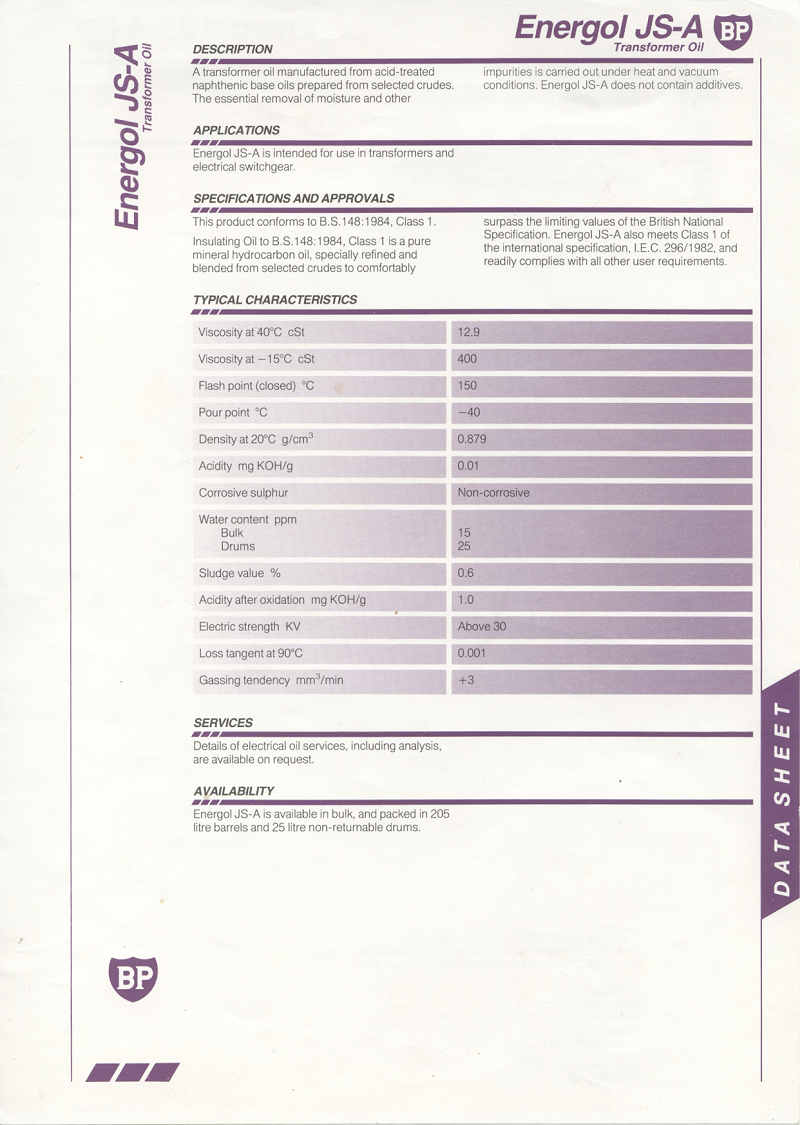
BP's Energol JS-A insulating oil
My unique turbine generator unit
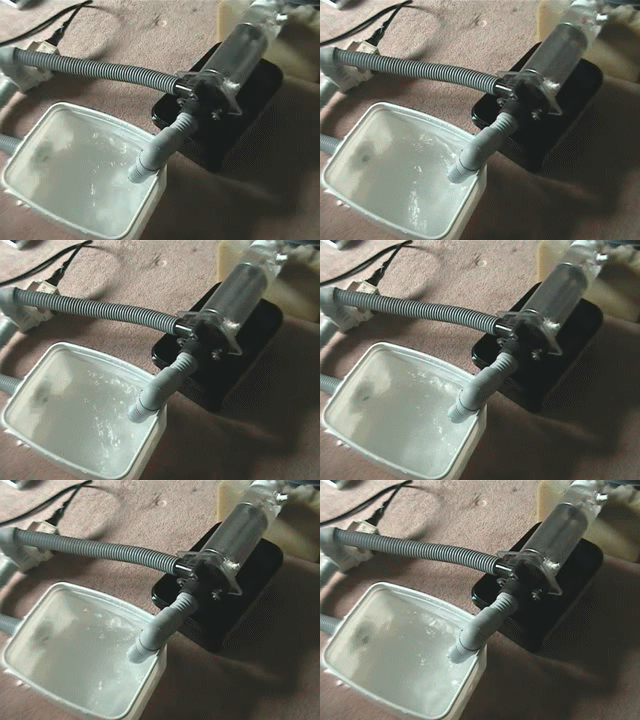
Model test of the fluid circuit and turbine
Dual turbine fluid circuit and pump
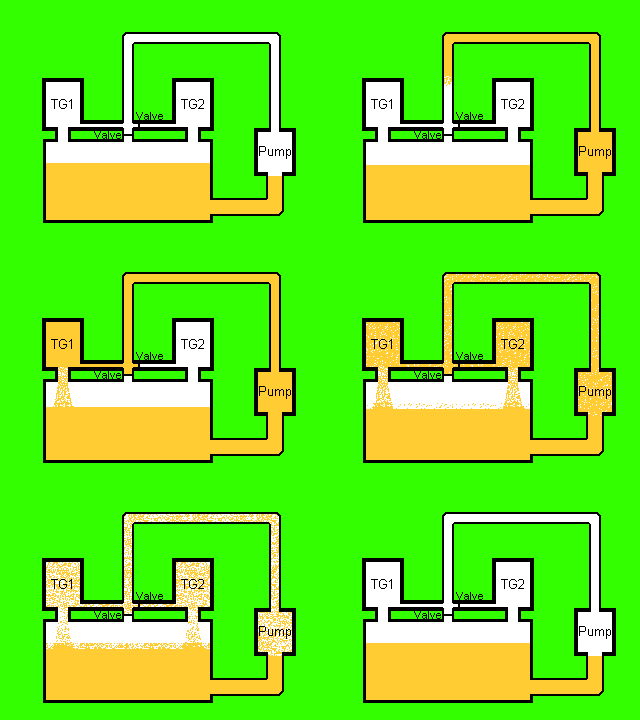
As the unique turbine generator unit produces a pure directly generated 3 phase AC electrical power output, a DC to AC inverter is not required.
The generator output is connected to a Polyphase (true rotating field) 3 phase traction motor (which is more powerful than other AC types) and the traction motor also has an additional transmission system fitted to lighten the loading on the generator - and also the pump.
The transmission system connects the driving force from the traction motor to the vehicle's wheels, so the output speed and torque can be easily varied - similar to a standard combustion engine and gearbox setup.
The energy to power the fluid pump from the battery is much lower than directly connecting the traction motor. The 3 phase AC generated output from the turbine generator unit is also in turn much higher than the DC battery input it takes to run the pump - because (using basic hydraulics) the pump can provide a very high pressure and fast flow of fluid into the turbine generator, while using a tiny amount of power. The result of which is the output is greater with an energy gain, there is also no need to convert the battery DC-to-AC using an inverter and most importantly there are NEVER any heavy discharges taken out of the battery.
The pump, turbine generator and the traction motor are also all internally cooled by the insulating Energol oil fluid - providing excellent internal lubrication plus outstanding protection against overheating. As the Energol gets pumped around the fluid circuit (during the lubrication and cooling of all moving parts), heat generated from that can be taken and 'recycled' just like with a combustion engine's coolant system. That heat can assist the warming of the vehicle's interior including all of the batteries, helping to prevent cold weather capacity loss and reduces the use of electric heating.
The batteries in my system do NOT need cooling, because the heavy current & overloading issue was designed out! Batteries are never discharged at a high rate - so will not overheat.
The transmission system also greatly increases the overall speed of the vehicle, plus reduces any high traction motor current demands (on standing starts - or when going up hills etc) as with this system high current demands from the traction motor need to be avoided as that could begin to stall the turbine generator rotation (if loading increases) - but due to the design of the vortex chamber, even if there were sudden excessive demands from the traction motor - pump loading would be minimal. The design does also allow for a total stall of the turbine generator (for example internal bearing failure) but even that would not increase pump loading as the fluid can easily exit the turbine chamber - and because the system has 2 turbine generators fitted, if one should fail there is a backup!
A total overload stall (apart from an internal failure as mentioned) however would not happen - because if the turbine rotation was detected to be slowing (due to increasing traction motor demands), the software controller would simply alter the transmission gearing so the loading became lighter, or if a manual transmission was being used (and the driver didn't react to any warning signals) the system could simply increase the fluid pumping rate to follow and match any overload demand, so the system would then become self-regulating.
WEVE SOLUTIONS: Battery management (switching and cycling)
Avoiding connecting any battery directly to the traction motor was only part of my electric vehicle improvement!
Some sort of additional battery power system was also needed, with management of the power too - including a reserve which could be readily available if the main battery was likely to fail.
If an electric vehicle had a second set of batteries - then not only could they be charging while the main set were being discharged, but they could also be a reserve power source and thus take over whenever the discharging battery had low capacity - so for this I developed battery task switching & cell cycling technology where multiple but independent battery 'sets' are used.
By using not just one but other separate battery systems, this totally new and pioneering step ensures a reliable backup power source for my unique electric vehicle system and finally avoids range anxiety as an onboard power source is available if required, VITAL as (even now) there's a limited charging infrastructure available (in most places) and 'running out of power' is still the main issue for (most) drivers who want to switch to a pure electric system, but are concerned about getting stranded if (or when) the battery gets low, or worse runs out.
This vehicle system as mentioned not only avoids the anxiety of running out of power (due to a backup battery set already onboard), but it also ensures a greater search distance once recharging is required - and the fully recharged set of batteries is always ready to take the driver to a power point!
So unlike all previous electric vehicles (with just one 'set' of batteries that discharge and then fail because of high traction motor demands), my unique and patented battery switching system has multiple battery sets - and what's more they are all independent of each other too, so any battery 'set' can do any 'task' (and then can be left to complete that), while another battery set can be tasked do to something else - because the battery sets are NOT connected together.
Multiple batteries are all completely separate - and with the ability now to do anything!
Battery switching and cycling example
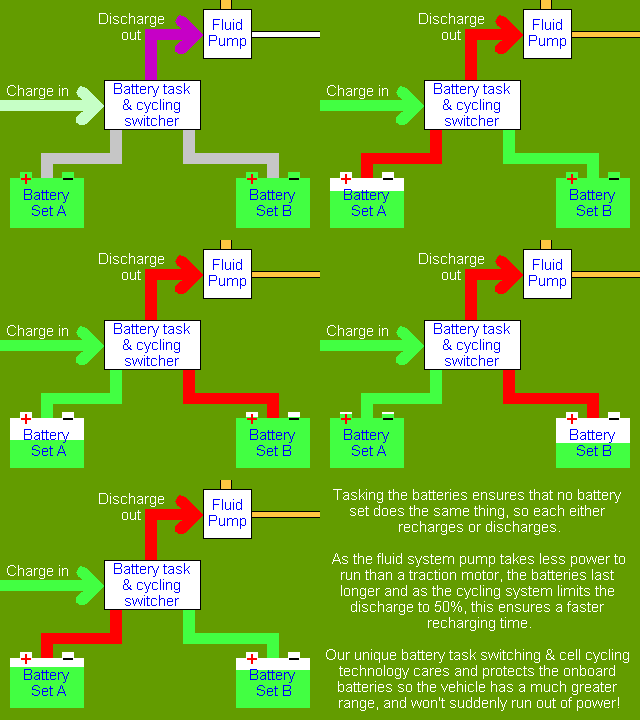
These important changes (from what was always done before, which were the main causes of EV failure) means my turbine based technology with battery task switching and cycling does operate TOTALLY differently to ALL previous electric vehicles. That's what makes it so unique, why I obtained patents (as this technology didn't exist before!) and took the time to simply work out WHY the electric vehicle wasn't working, LOCATED the problem (2 of them!) and thus designed a new technology to solve it!
For the first time batteries are never discharged heavily into the traction motor AND now they can swap over too (giving a far better battery life as they aren't 'stuck' doing the same thing all the time), plus there is finally a reserve power source onboard that's always readily available.
The switching technology also ensures batteries powering the light duty pump are never pushed to the limits and won't overheat either as the cell packs have limited discharge levels (controlled by battery monitor circuits which check the status of each battery set) and the battery cycling process ensures 'rest' periods are given before re-tasking, which leads to a better battery life so they will run and last much longer. Although now automated this system can be fully manually controlled too - and battery recharging is also much faster as the cells are never run down to very low levels, so cells won't suddenly go flat!
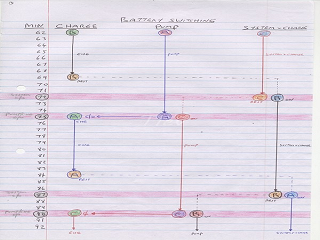
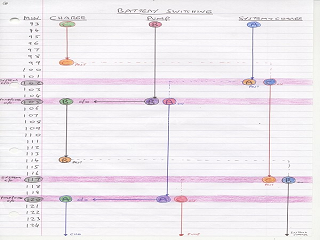
Automotive companies were suggesting battery swaps (rather than drivers waiting ages to recharge their car) in an attempt get more range out of an EV, mostly because the fitted batteries were discharging rather quickly! - but with this system there is no need to physically 'swap' any batteries, because being one step ahead multiple cells are already onboard! The cycling and tasking of all cells is controlled by my unique system and that in turn greatly enhances battery life, which means they won't need replacing after only a few years use. This leads to lower running costs, plus even though with this system there are multiple battery sets, fewer battery cells are actually required in total since (by using a pump) the current demands are so very much lower and because of this my vehicle system is lighter (than all other EV's), which results in an enhanced performance!
New technology however doesn't tend to work exactly the same as the old technology did, so possibly it might need some extra explanation!
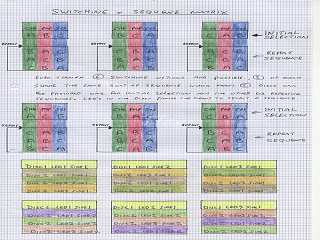
This EV system is NOT like any previous electric vehicle design (and possibly this might appear to be rather strange to some people - it certainly originally did to my Patent Agent!) because it actually runs rather similar to a combustion engine. There is no pollution (of course!) but with a combustion vehicle the engine is never switched 'on' and 'off' during driving and in our system (once started) the pump also runs all the time while the vehicle is being used.
Unlike all electric vehicles previously that are switched on and off during use - they 'go' when the power pedal is pushed down and 'stop' when the power pedal is released, but that old 'GO' - 'STOP' method was the main cause of high current surges, very high in some cases (such as standing starts or a hill climb) because as the battery was directly connected to the traction motor, it took on the load and discharged heavily.
My system doesn't work that way, because running a small pump gives the battery a constant and (more importantly) minimal loading - much better than varied and usually high current demands.
My original electro-mechanical systems have advanced to allow the use of the latest digital software control - so vehicle operation is now much more 'user friendly', as the original bank of complicated dashboard switches in the prototype have been replaced by a simple 'AUTO' or 'MANUAL' task selection function - and once that has been done the vehicle operating software takes over the running of the vehicle's computer controlled systems.
The latest software controlled system also consists of a 'RUN/RESUME' function, which either selects the vehicle to 'run' for the first time (initial system boot) or selects the 'resume' command from a previously stored cycle state. A 'STOP/PAUSE' function stops and 'pauses' (holds) the vehicle in its current cycle state - ready to be restarted using 'RUN/RESUME' since each task assigned to any battery set must cycle through its specific sequence and switching. This is very important for maximum battery capacity and life, and since car driving can consist of many stops and starts, the battery switching cycle sequence can be interrupted at anytime - but the cycle and sequence now won't be lost and thus can be resumed whenever it is required.
In a practical example (like driving to a store) this would involve initially starting up the vehicle where the batteries are first 'tasked' (auto or manual) by using the dashboard touchscreen and the vehicle is then ready to be driven. On arrival to the store the vehicle is parked as normal - and the system is then 'STOP/PAUSED' because the vehicle is to be parked up for a while and thus is not required. However on return to the vehicle 'RUN/RESUME' is then selected to 'start' up the vehicle again - but the system resumes from the last battery switching cycle to then either leave the car park and (for example) return back home, or travel on to somewhere else.
The operation of the vehicle might still appear complicated (with initial battery task selection and the battery switching cycle processes) but the onboard system controller usually can take care of everything with only just a few touchscreen inputs required from the driver UNLESS a manual override is requested - then the driver can gain full control of the entire system and yes it does get more complex then, but the onboard system can provide helpful guidance and advise the driver if an input they have done is rather illogical (or totally wrong!) with a possible visual or spoken warning such as 'are you SURE you want to do that!' - however with basic training any driver should easily be able to master the new vehicle system, but most I think will choose the auto option and let the onboard system do all the work, knowing however that if they want to they can take over control manually!
So the vehicle driver would normally get in and 'start' it for the first time (initial system boot) by pushing AUTO TASK which then fully auto-selects the initial battery tasks and the system then takes over. By pushing MANUAL TASK (if required) the driver would then have to select initial battery tasking (thus taking over control of the system), however manual tasking is not normally done and the switching and cycling process would normally be fully automatic, but (and unlike driving other electric vehicles) our system does operate quite differently - and although fully computer controlled the driver will have many more options available with regard to which battery is used to do what, how the power from them is directed - plus other manual and bypass re-routing options too, all of which is usually done by the onboard software but it allows for full manual access too.
In a normal situation (when using the AUTO TASK automated system), the control software firstly checks the status of each battery set (either after a night's recharging - or from a last use) and from that auto-tasks or resumes them accordingly.
So as an example starting up the vehicle going to work in the morning - because the pump has to have the 'best' battery in the set (as it will be discharging first) the best battery set goes to the pump, the worst going to the system (as that uses very little power) and remaining set going to charge, which will then be discharging on switchover. When the vehicle is new the battery sets will all be roughly the same, so a random choice of tasking would be done, but over time each cell set will start to develop their own individual status, so it is important to then match the battery to the best task - and by using new software control that is the most efficient and easiest way to control the systems in the vehicle, however again a manual over-ride can at any time be undertaken if required.
Driving the vehicle is just like driving a normal car, but if the vehicle is required to stop for a while (at any time) the driver tells the system this by selecting stop/pause, but because the vehicle will be required again shortly the software only stops & pauses the system rather than switching everything off, because it is important that the battery switching cycles during use are not broken if the vehicle will be needed again. When the vehicle is needed again, everything resumes from where it left off last time - until the vehicle is no longer required and then it can be recharged. Again all of this is handled by the onboard system controller, unless manual operation is required. Also although several battery 'sets' are used in the vehicle, the driver or owner would simply plug in a single charging lead - and the system software will ensure that all of the battery sets are ready for the next usage.
Unlike all other electric vehicles, my system can switch ANY of the batteries into whatever task is needed - leading not only to better battery life, but it also ensures power is always available from somewhere - and even if there is a problem, backup power can be re-routed (either automatically or manually) so the vehicle can also keep going!
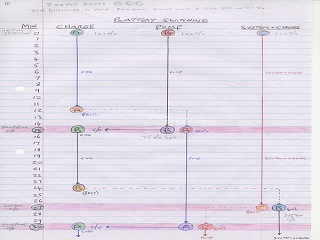
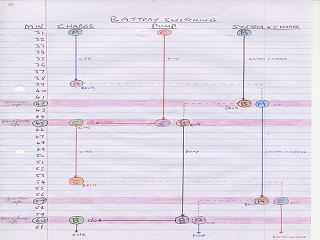
The newest digital control still has the original 3 controller lines of Charge (CHG), Pump (PMP) and System (SYS) which makes the entire system somewhat easier to understand in operation and also stops the same battery from doing the same thing time and again, ensuring a longer life. The software based switching and sequencing system controls each battery and ensures that not only does it never go below a set capacity (so the capacity and life of the battery is longer - and also the recharge time is shorter) but as the switching follows a sequenced method all charging batteries can have 'rest' periods before being re-tasked into a discharging cycle - and also any battery which was discharging can be tasked to be recharged and then also rested.
Battery sets are also fully monitored by the software - this helps track the performance and history of them all as the charge and discharge rates are stored, so are all cell voltages, recharging currents, task and cycling history patterns and other important data. The system and owner is thus aware of everything! This is why software control is so much better (compared to the outdated electro-mechanical based switching) as the system software can tell which battery set (if any) is below par and thus likely to cause any trouble, also the best battery can always be chosen for initial usage (unless manual tasking is activated) and because of this there is a huge data stream of valuable information now available to the driver (either via the touchscreen, or via data-to-voice details) as the vehicle is used, which is so much better than just a basic high/low battery meter which all other electric cars just have.
With the computer system running all the onboard systems via software it also then enables a very advanced management device to assist system functions relating to driving and/or environmental conditions (such as a windy/wet weather modes etc) - and now by using my latest 'Laser-aid' power-pathfinder EV navigation system (which constantly tracks the road ahead) that information is fed back into the controller system so it's ready in advance for any steep inclines or sudden drops in the road, giving additional traction control or anticipating a turbine slow down due to extra traction motor demands as previously mentioned.
Even with performance driving the system can easily cope with a higher demand of speed and endurance as the onboard system monitors everything and with each of the independent battery sets fitted to the vehicle they can perform any task that is required and this helps to 'rotate' the batteries, ensuring a longer capacity and life. In addition regenerative braking can finally assist a recharging battery because it is NOT being discharged at the same time. A battery set can be also tasked to run the vehicle 'internals' as high power audio systems and other electronics are now fitted to most modern cars.
I was the first and only person that invented and thus can offer this special 'drop in' Turbine Technology with additional battery management (switching and cycling) suitable for any 'pure' electric vehicle because the system is totally unique.
Hours of work, and many years went into developing this advanced technology, of which I'm very proud.
This unique system can go into any vehicle, device or application requiring a 100% pure electric system - it avoids ALL previous EV technical issues and is also environmentally friendly too!